
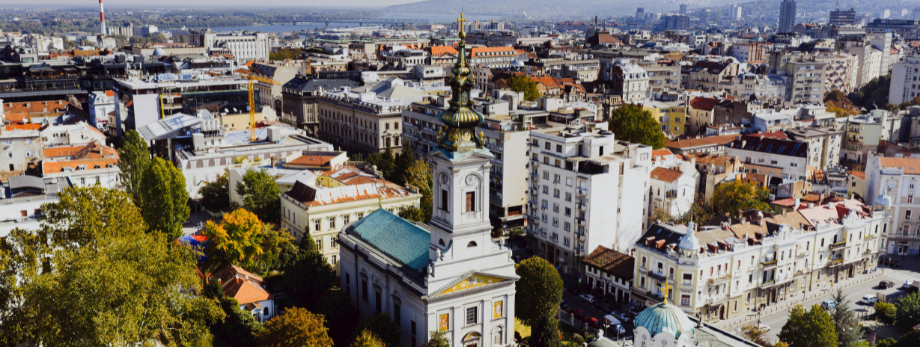
Serbia is becoming an increasingly attractive destination for foreign real estate investors and expats. Whether you are looking to relocate, invest, or buy a vacation home, understanding the legal framework is crucial. Here is a complete guide to help you navigate the process of buying property in Serbia.
1. The Legal Side: Who Can Buy Property in Serbia?
The most important legal concept for foreign buyers in Serbia is reciprocity (uzajamnost). Foreign individuals can buy apartments and residential buildings in Serbia under the condition of reciprocity, meaning Serbian citizens must also be allowed to buy property in your home country.
If you are a foreign individual or legal entity conducting business in Serbia, you can also acquire real estate that is necessary for your business activities,.
Buying Agricultural Land and Using SPVs Direct ownership of agricultural land by foreign individuals is generally restricted by law. However, foreign investors often bypass this limitation by establishing a company in Serbia, acting as a Special Purpose Vehicle (SPV). Since a foreigner can be the sole owner of a company in Serbia, this domestically registered company can legally purchase agricultural land and other restricted properties.
2. Step-by-Step Buying Process
Buying a property involves a standardized legal procedure designed to protect both parties:
- Property Search and Legal Check: The first step is finding the right property and thoroughly checking its legal documentation, including ownership status and any potential encumbrances in the Real Estate Cadastre,.
- Pre-contract and Deposit (Kapara): Once you agree on a price, you will sign a Pre-contract (Predugovor) and pay a deposit, known as kapara,. This deposit officially reserves the property and serves as a guarantee that the main contract will be signed.
- Main Contract and Notarization: The Main Contract (Glavni ugovor) must be drafted and subsequently solemnized by a Public Notary (Javni beležnik) in the jurisdiction where the property is located,.
- Payment: After notarization, the purchase price is transferred to the seller’s account.
- Clausula Intabulandi: Upon full payment, the seller must issue a Clausula Intabulandi, which is an unconditional, notarized statement allowing the buyer to register as the new owner,.
- Registration: Since 2018, public notaries are legally obligated to send the solemnized contract directly to the Real Estate Cadastre (Katastar) through the e-šalter system within 24 hours, initiating the registration process automatically.
3. Rules on Payments and Foreign Accounts
When it comes to transferring funds, Serbia has strict financial regulations:
- No Cash Payments Over 10,000 EUR: Under the Law on the Prevention of Money Laundering and the Financing of Terrorism, any real estate transaction of 10,000 EUR or more must be executed via bank transfer; cash payments for these amounts are strictly prohibited,.
- Paying from a Foreign Account: If both the buyer and the seller are non-residents (for example, a Canadian resident buying from a Swiss resident), the payment can be executed directly between their foreign bank accounts. There is no legal obligation to bring the funds into Serbia or open a non-resident account in a local bank for this specific transaction.
4. Costs and Taxes of Purchasing Property
Budgeting for additional expenses is an essential part of the buying process. You should account for the following costs:
- Notary Fees: The fee for the solemnization of the contract depends on the property’s purchase price according to the official Notary Tariff.
- Additional Fees: You will also need to cover bank transfer commissions and administrative taxes for the registration of your ownership in the Cadastre,.
- Property Transfer Tax: There is a Property Transfer Tax (Porez na prenos apsolutnih prava) set at a rate of 2.5% of the property’s value. While the seller is technically the taxpayer by law, it is standard practice in Serbia for the buyer to assume this cost.
- Annual Property Tax: Once you become an owner, you are obligated to pay an annual property tax (Porez na imovinu) to the local municipality,.
5. Visas and Residency Opportunities
One of the major perks of buying property in Serbia is the opportunity to obtain legal residency. Owning residential real estate in Serbia is a valid legal basis for applying for a temporary residence permit (privremeni boravak).
Foreigners can conveniently apply for temporary residence or an e-visa electronically by filling out an online application on the official Portal for Foreigners (Portal za strance) This makes the relocation process significantly smoother for property investors looking to spend more time in the country.
Leave a Reply